Healthcare in Africa on brink of crisis as US exits WHO and USAid freezes funds: health scholar explains why
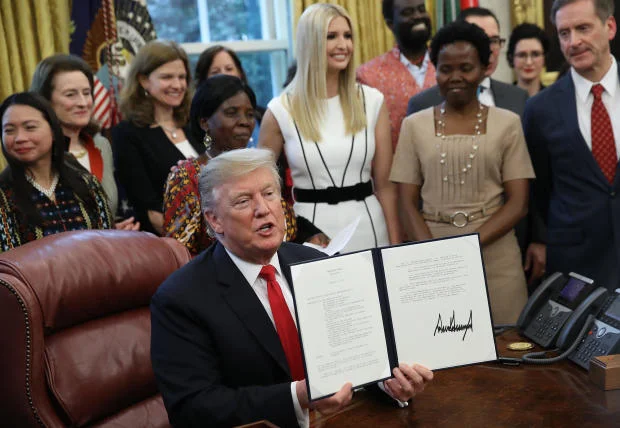
US president Donald Trump has taken a series of decisions that have delivered body blows to the global management of health. He has announced that the US will leave the World Health Organization. And a 90-day freeze has been placed on money distributed by the US Agency for International Development (USAid) pending a review by the US State Department. This includes funds for the President’s Emergency Plan for Aids Relief (Pepfar). The decisions have triggered alarm in the global health sector. Catherine Kyobutungi, executive director of the African Population and Health Research Center, outlines which countries are most at risk and which health programmes will suffer the most damage. What does the US exit mean for Africa?The US exit from the WHO and the freeze announced on USAid funding are devastating moves that will have drastic effects on the health of millions of people in Africa. The US is by far the WHO’s largest state donor, contributing approximately 18% of the agency’s total funding. US development aid is used to run large-scale health programmes on the continent. For example, Nigeria received approximately US$600 million in health assistance from the US, over 21% of the 2023 health budget. The WHO is a global health body that synthesises scientific research and develops guidelines that countries in Africa rely on to shape their own policies and practices. The biggest loss for Africa under the USAID umbrella will be funding for Pepfar, which is used for HIV-related programmes including prevention, testing and treatment. Through Pepfar, the US government has invested over US$110 billion in the global HIV/Aids response. What’s going to be lost?A range of capabilities. Firstly, technical guidance. The WHO provides technical guidance to countries on issues ranging from TB management to cost-effective malaria control. Secondly, the ability to mobilise resources. The WHO has the mandate and mechanisms to assemble experts from across the globe to evaluate new therapeutics, diagnostics and vaccines. They can evaluate new evidence on emerging patterns of new bugs, resistance to current treatments, and so on. Thirdly, the WHO has tools and mechanisms that have been key to African countries’ health policy decisions. These include: the WHO’s list of Essential Medicines to inform decision-making on critical drugs a similar mechanism to evaluate new vaccines, resulting in guidance that makes regulatory approval faster and easier in African countries which don’t have strong systems. Fourth, the WHO also provides resources for emergency response, as in the event of disease outbreaks such as Ebola and COVID-19. The WHO is able to quickly mobilise experts and funds and to coordinate emergency responses. Fifth, the WHO provides evidence-informed guidelines. It does this by gathering and sharing information like the causes of outbreaks, while monitoring signals of potential outbreaks and coordinating efforts to develop new technologies, such as vaccines and medical devices. Sixth, the WHO’s ability to support critical programmes in tuberculosis prevention and emergency response will be reduced. Seventh, the withdrawal of US citizens working in these global agencies – and the orders to stop sharing data – mean the US is essentially excluded from global information-sharing mechanisms that keep us all safe. It will be harder to share information about emerging health threats in the US with the rest of the world and vice versa. Which countries will be most affected?Many African countries are heavily reliant on the support provided by Pepfar and USAID to fund programmes in the health sector and for humanitarian assistance. Countries which will be most affected are those with a high burden of HIV, TB and malaria and those with large populations of refugee and internally displaced people. Currently the top eight USAid recipients in Africa are: Nigeria, Mozambique, Tanzania, Uganda, South Africa, Kenya, Zambia and the Democratic Republic of Congo. Without funds being rapidly mobilised to fill the gap left by the US withdrawal, the effect on the health of millions of Africans is at stake. Failure to prevent new infections, and the threat of drug resistance developing because of disrupted treatment, will have far-reaching consequences. In Uganda, where about 1.4 million people are living with HIV/Aids, 60% of the spending on its HIV/Aids programme was from Pepfar, and about 20% from the Global Fund (partly funded from Pepfar). A drastic reduction in funding will be devastating for patients and the greater health system. The Pepfar programme, a lifeline for millions of Africans, has been under threat since before the most recent aid freeze. In 2024, the American congress only gave a one-year authorisation instead of the typical five-year funding authorisation. A conservative backlash against this programme has been growing for years with concerns that some funds may be used to fund abortion. The current authorisation expires in March 2025 and falls within the 90-day aid review period. With the current approval expiring next month, and in light of the current atmosphere, it is very likely that it may not be renewed. Read more: How US policy on abortion affects women in Africa What steps should African countries be taking?There has a been a lot of discussion around jobs and lives lost, but not much around what happens next: how African governments are planning on mitigating shortfalls in their health budget in the short term and foreseeable future. Therefore we need to ask our governments what that means for us and how they are planning to ensure that we do not reverse the gains made so far. This includes preventing millions of HIV infections, improved testing and provision of life-saving antiretroviral treatment. The sudden and drastic decisions taken by the Trump administration have been hailed by several commentators as the wake-up call the continent needs – to wean itself off dependency on a flawed “development aid” system that is admittedly a tool for geopolitical influence. The disbelief and chaos in the global health sector should be rapidly mobilised into citizen action, for governments to invest in a critical sector that has depended on foreign assistance for too long. In the absence of sustained investment, the gains